
When taking a bird’s-eye view of 2026, February, April and July stand out as the year’s hotspots. Describing the events of those months as volcanic would not be an exaggeration. For instance, events on tap for the Sun Aquarius transit include sign changes for Saturn and Neptune and the year’s first eclipses. Technically, the Sun will move into Pisces on February 18th, and the developing Saturn Neptune conjunction, a once in 36 years occurrence, will not be exact until February 20th. But its influence, as well as the larger, distinct change from the mutable water of Pisces to the cardinal fire of Aries will begin under the Aquarius Sun.
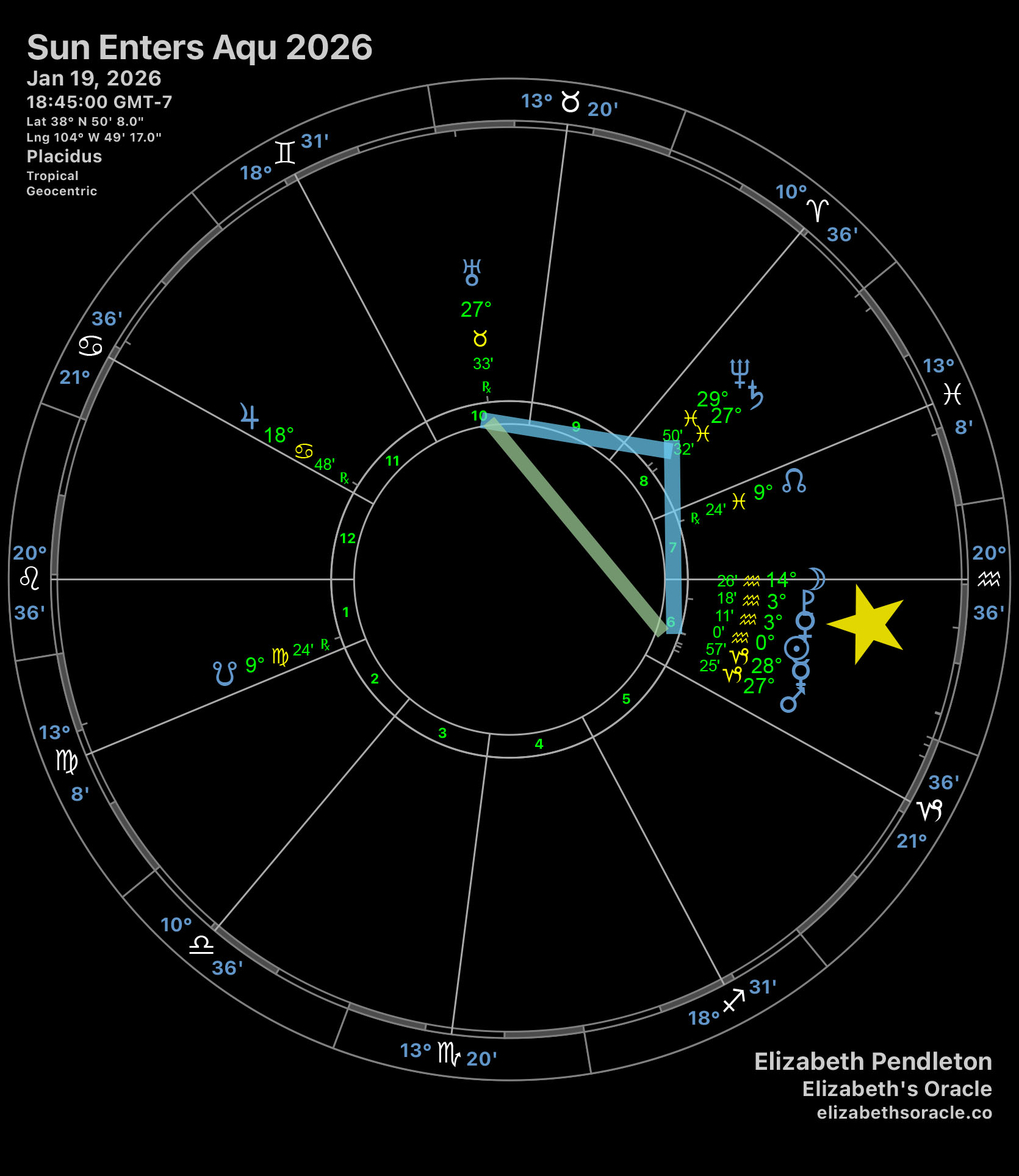
Due to the presence of Pluto in early Aquarius, the Sun’s entrance into astrology’s fixed air sign on January 19th will be pronounced. One by one, the personal planets will immediately begin conjoining the purifying planet. This includes Venus on January 19th, Mercury on the 22nd, the Sun on the 23rd and Mars on the 27th. Pluto has a way of revealing the truth, so noting insights that emerge around these dates is warranted. If Pluto fails to crack codes, blockbusting Uranus is set to square those same planets, after it stations direct on February 3rd. Mercury’s presence in innovating, futuristic Aquarius, from January 20th to March 6th, emphasizes the importance of messages and transmissions. It will square Uranus on February 5th, and Venus will square the change-maker on the 8th, followed by the Sun on the 16th and Mars on the 27th. Mercury’s Uranus connection will take place the day before it enters Pisces, the sign of its first retrograde of the year.
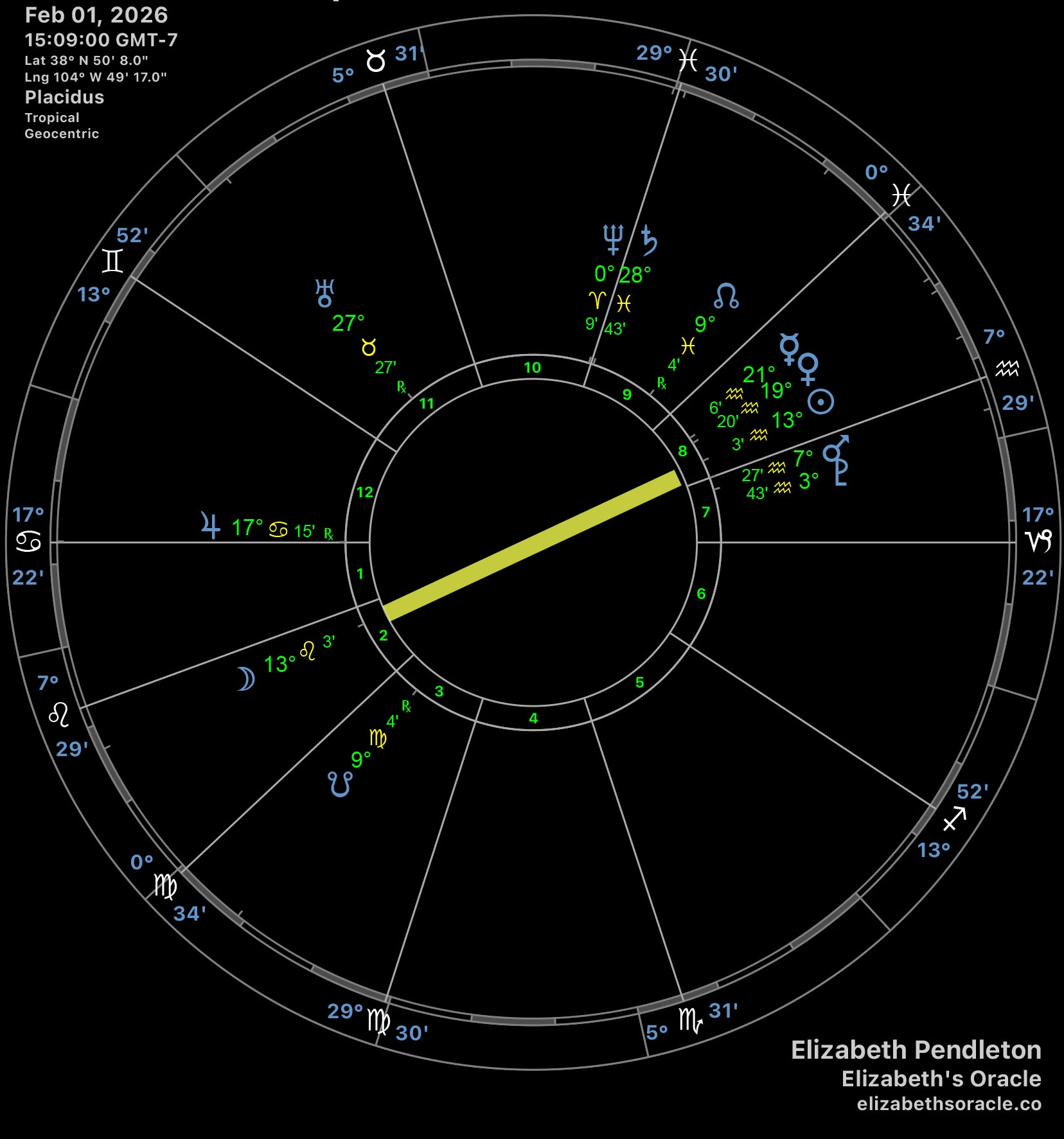
Though the retrograde will not commence until February 26th, at 22° Pisces 34′, Mercury will cross the shadow of the Rx on February 11th, at 8° Pisces 29′. That is the point it will be back to on March 20th, when it stations direct. Mercury communicates, and its illuminating connections to Pluto and Uranus will be accompanied by the year’s first eclipse. Full Moons and eclipses, similar to Mercury’s retrogrades, are known for their revelations, and the Moon will be full on February 1st, at 13° Leo 04′. The axis of the eclipse cycle is also changing in 2026. It’s moving from mutable Pisces and Virgo to fixed Aquarius and Leo, adding to the overall motion into air and fire happening amongst Jupiter, Saturn, Uranus and Neptune this year. The year’s first eclipse, a new Moon Lunar one, will take place at 28° Pisces 50′ on February 17th, the day after the Sun Uranus square and the day prior to the Sun’s Pisces ingress. The negative polarity of water and earth signs is associated with receptivity, introspection and femininity, while the positive polarity of air and fire is considered to be outgoing, extroverted and masculine. This polarity change will contribute to the sense of February, and the Aquarius Sun cycle, being the year’s ignition point.
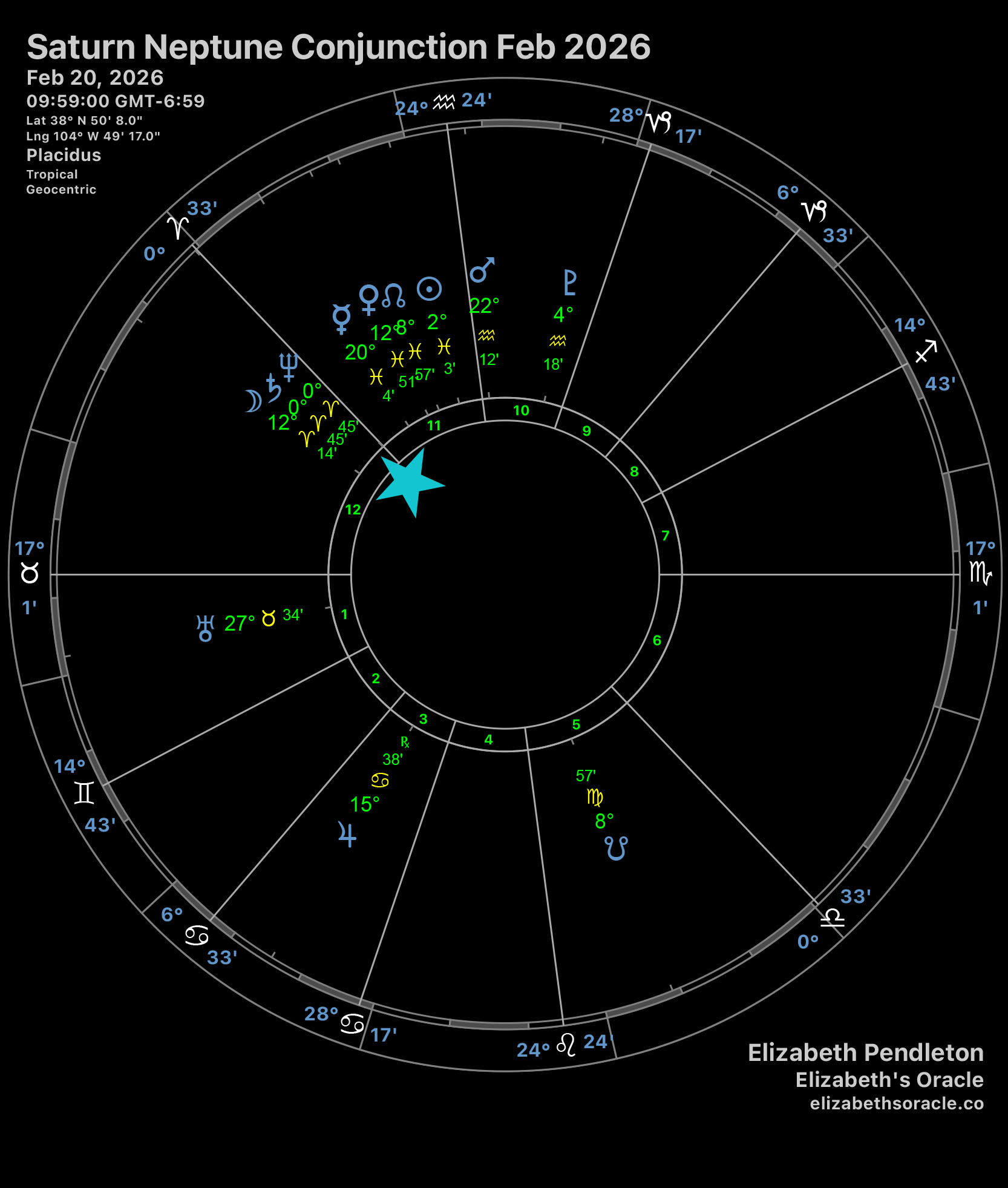
Another signal that an entirely new phase is getting underway is that the Saturn Neptune conjunction will be at 0° Aries 45′. Aries is the first sign of the zodiac and zero is the starting degree of each sign. For reference and reflection, Saturn has been in Pisces since March 7, 2023 and Neptune entered the sign on April 4, 2011. After January 26th, Neptune will stay in Aries until March 23, 2039, and following its February 13th ingress, Saturn will remain in the initiating fire sign until April 12, 2028. A six planet Aries stellium is set for this April and a history-making Mars Uranus conjunction will arrive in combustable July. Mercury’s connections, the eclipses and the forays of Saturn and Neptune into adventuring, Mars-ruled Aries may provide guidance about what the longer term cycles will bring. In any case, the fires of 2026 are now being lit.